
Smart meters have transformed leakage management. Leaks are now being identified faster and with greater accuracy than ever before. Yet despite these advances, water loss across distribution networks remains persistently high.
The reason is no longer detection. It is delay.
According to Michael Quinn, Co-Founder of QINOV8 and developer of AQUAPEA, the critical issue sits between detection and repair.
During this detection-to-repair gap, treated and pressurised water continues to escape, carbon has already been spent, and the value of early detection steadily erodes.
Detection alone does not save water. Leak duration determines the outcome.
Jason Marshall, CEO of Pipe Core, believes this gap highlights where innovation must be focused.
“The industry has made significant progress in identifying leaks,” he said.
“The next step is ensuring that information leads to action quickly. Solutions that shorten the path between detection and repair are where real performance gains are made.”
The impact of delay is stark.
Two identical leaks, each losing five litres per minute, produce very different outcomes depending on response time. Addressed within an hour, approximately 300 litres of water are lost.
Left to follow a traditional find-and-fix process, that same leak can remain active for up to 21 days, resulting in more than 150,000 litres of treated drinking water lost.
The leak is the same. The outcome is not.
Closing this gap requires a shift in approach. Rather than defaulting to excavation for small-diameter leaks, rapid trenchless intervention can dramatically reduce leak duration.
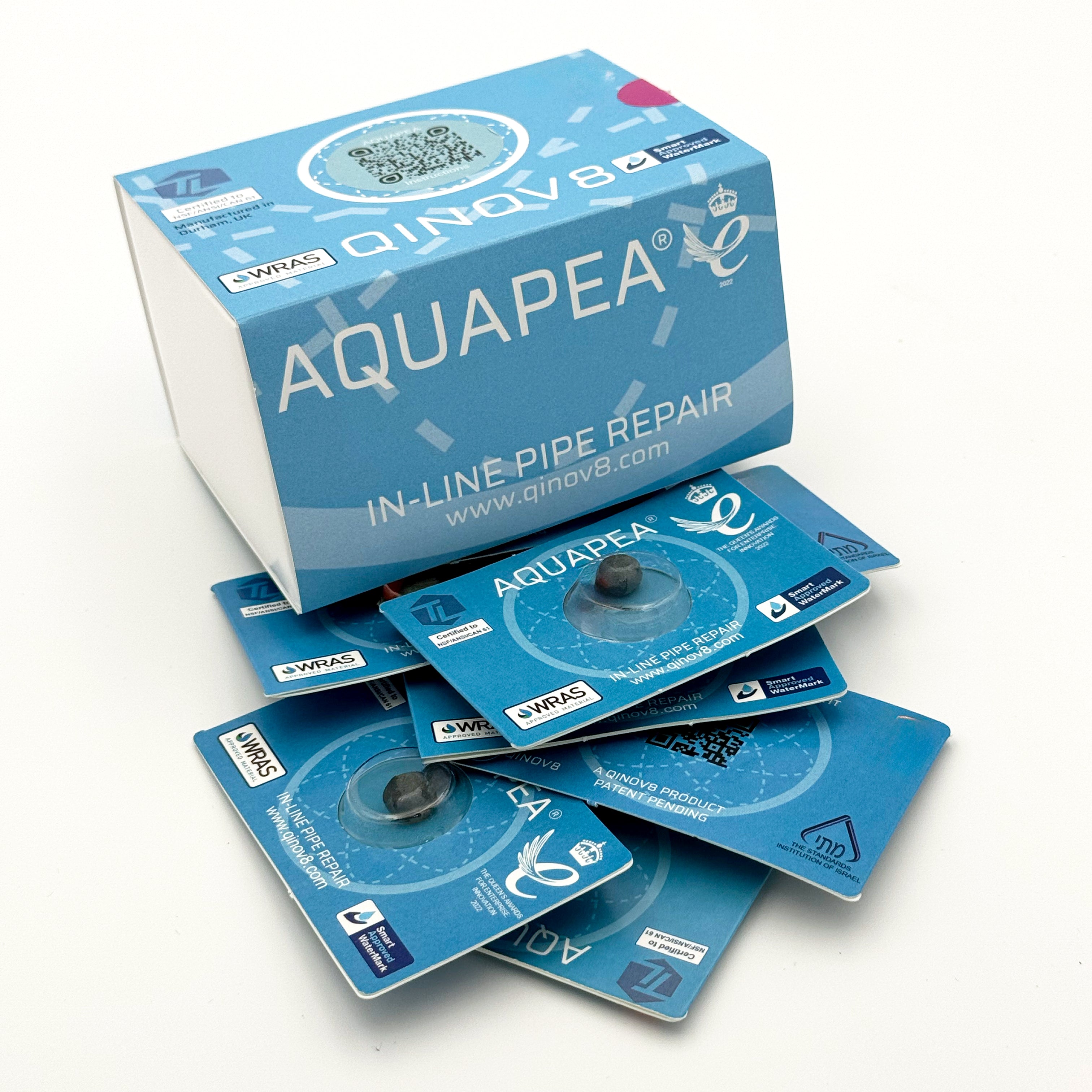
AQUAPEA has emerged as a proven first-response solution, enabling leaks to be sealed immediately at the point of detection, without excavation or reinstatement. When deployed early, customer-side leakage reductions of around 70 per cent are achievable.
The AQUAPEA process involves introducing a small resin-filled ‘pea’ through an external meter chamber. Carried by normal line pressure, it is drawn into the defect where the polymer forms a durable seal through and around the leak, with no digging, shutdowns or surface disruption.
“What stands out is the speed and simplicity,” said Ben Chetcuti, Plumbing Supervisor at Mr Leak Detector.
“If a leak is active and you’re already on site, being able to seal it immediately changes the whole equation. It turns detection into an outcome, not just a report.”
Excavation will always have a place in network management. However, as smart meter programs expand and pressure on water resources increases, it is increasingly suited to being the last resort rather than the first response.
Closing the gap between leak detection and repair is where leakage reduction becomes tangible. It is also where resilience is built, not by finding more leaks, but by fixing them faster.
This article was originally posted on Trenchless Australasia